Dynamic Glitter Text Generator at TextSpace.net

Narrative Text


Definition of Narrative

Narrative is a text focusing specific participants. Its social function is to tell stories or past events and entertain the readers.

Generic Structure of Narrative

A narrative text will consists of the following structure:
1. Orientation: Introducing the participants and informing the time and the place
2. Complication: Describing the rising crises which the participants have to do with
3. Resolution: Showing the way of participant to solve the crises, better or worse
4. Re-Orientation

Language Features of Narrative

· Using processes verbs
· Using temporal conjunction
· Using Simple Past Tense

Example Narrative Text


The Legend of Karimunjava Island


Once upon a time in Muria Mountain, there lived the family nd Sunan Muria. Amir Hasan or Called Sunan Nyamplungan is the son of Sunan Muria.
He was very spoiled by his mother, because of that he became a naughty boy.


Then his father, Sunan Muria asked him to study in Kudus. He studied Islamic religion to his uncle, Sunan Kudus . After sometime, he became an obedient young man, Sunan Muria was very proud of him.


One day Sunan Muria asked Amir Harbo to go to somewhere to spread Islamic religion. His father asked him to goto an Island that could be seen from Muria Mountain.
It was on the northwest of Jepara. This island seemed to be fade (Kremun-kremun on Javanense) and from that time, people called the island as Karimunjava Island.


Amir Hasan followed by his mate to Karimunjava Island. Them sailed to the island day and might and finally the reached the island. Then they did what his father said. Amir Hasan and his people lived in the island ever after.

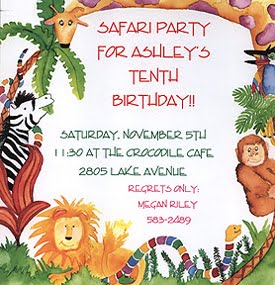
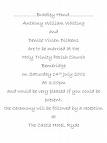
Invitation (written)


Most spore invitation are in the farm of question they often begin with will,would,would you like to,would you care to,etc

Offerins invitation
  • Would you like to come to the restaurant this evening?
  • Will you join us?
  • Would you care to have dinner with us tonight?
  • Could you come to a party at my place tomorrow?
  • I wander whether you would care to come on a picnic with us next week?

Accepting invitation
  • Yes,I’d love very much.
  • Thank you.
  • Yes,with pleasure.

Reffusing
  • If you don’t mind,i’d rather not.
  • Thank you,i’m busy,may be next time.
  • I have got another appointment.
  • I’m sorry.
  • I’ve lost to work to do.

Example :

Invitation Verbal
  • We want to invite you to come to our house
  • Can you come to my restaurant?
  • Are you free tonight?


Accepting (menerima)
  • I like that
  • That sounds good
  • Thank you for inviting


Refusing(menolak)
  • I like that but I can’t
  • I’m very sorry for not able to come
  • Sorry, I’m very busy
Example invitation formal :
 

Example informal :

Asking For Information


What is a question?
A question is a request for information or action.
When writing a question you should always end the sentence with a question mark (?).


Asking for information

-(Excuse me) can could you tell me (the way to the station/...)
-Do you know (if they are here / when they leave /...)
-Could you give me some information about ...
-Is it true that (they have moved /...)
-Have you got an idea of (when they leave / ...)
-I'd like to know (what he does / ...)


Correcting agreeing with a statement

-Yes, it is / was / will ...
-Oh yes, I did / Oh no, I didn't.
-That's (quite) right.
-No, it isn't really so.
-I'm sorry but that isn't correct.
- Well, it's the contrary in fact.


Asking about language

-Pardon? / I beg your pardon?
-I'm sorry I didn't catch what you said.
-What do you mean?
-What is the meaning of ...?
-How do you pronounce..?
-How do you say that?
-How is it spelt? How do you spell ...?


Expressing certainty

Being sure.
I'm sure / certain (that) (he will come / ...)
-There is no doubt about it.
-No doubt (you'd like to see your gift / ...)
-I certainly think / believe that (she was unhappy / ...)
-I'm positive on that point.
I'm certain...
-It is obvious that ...
-That goes without saying.
-It's crystal clear.
-It's as sure as two and two make four.
Being less sure.
-I think so
-I think that ( they will be there by 6 / ...)
-I suppose so.
-I suppose / expect that ( it is the way to the bus stop /...)
-I believe that ( he is sick / ...)
-I assume (that ) (they did it / ...)
-It's more than probable that ...
-I wouldn't be surprised if ....
Being unsure.
I'm not sure (that) ...
-I wonder if...
-I doubt if ...
-May be / perhaps (they're right / ...)
-It's very doubtful whether (he'll accept / ...)
-There's a little chance of ( arriving in time / ...)
-It isn't known for use ...
Not knowing.
-I don't think so.
-I don't think that (they will give her a ring / ...)
-I don't know / I've no idea / I wouldn't like to say (where it is).
-I haven't the faintest idea.
-Sorry, I can't tell you.


Inquiring about certainty

-Are you (quite) sure (that) ...
-Do you think so?
-Do you think that ...?
-Do you believe / suppose that (it's a good idea / ...)?


Expressing possibility

-It is possible
-It is possible (that) (it rains / ...)
-I / you ... can (drive / read / ...)
-He / we / ... is/are capable of ( doing better / ...)


Expressing impossibility

-It is impossible
-It is impossible (that) (it rains / ...)
-I / you ... can't (drive / read / ...)
-You can't possibly ( do this / ...)


Inquiring about possibility

-Is it possible?
-Is it possible (that) (he will come / ...)
-Will he / she / they .. be able to (do it / ...)?
-Can he / she /.... (drive / read /...)?


Expressing obligation

-You have (got) (to go / ...)
-We / you ..must (leave / ...)
-Do behave yourself!
-It is compulsory.
You are to .. (be there at 4 / ...)
-We are forced to do so.
-We were obliged to (pay / ...)


Expressing there is no obligation

-It's not necessary / not necessarily.
-No) you needn't / you don't need to ... (go out / ...)
-No need to (wait / ...)
-You don't have to .. (wait / ...)
-You haven't got to (wash the car / ...)
-It is not compulsory.
-It is not absolutely vital.
-Why should you?
-You aren't obliged to ...(wait for them /...)


Inquiring about obligation

-Must we ( go / stay /...)
-Do you have to ( wash our hands / wait/...)
-Have I / we got to ( go now /...)
-Is it compulsory?
-Am I / Are we required to ( take an exam / ...)
-Need we (stay / ...)
-Am I to (wait here / ...) ?
-Am I obliged to (leave / ...)?
-Are we supposed to (read this book / ...)?


Forbidding, refusing permission

Parking is strictly forbidden / prohibited here.
-Trespassers will be prosecuted.
-No begging / parking / waiting / ...
-The won't let me (go out / ...)
-Nobody is to (enter this area / ...)
-I was refused permission to ( use my car / ...)
-You may not (drink alcohol / ...)
-We weren't allowed to (talk / ...)
-It's out of question.
-Smoking / drinking alcohol .. is not permitted/ is prohibited.


taken from: http://www.tolearnenglish.com/exercises/exercise-english-2/exercise-english-17644.php

Modals In The Past Form


1. Could + Verb base

  • To offer suggestions or possibilities
Example:
Jason : Oh, no! I left my shorts.
Nate : Don’t worry, Jason. You could borrow my shorts.

Mitchie : I’m having trouble with English.
Demi : Why don’t you ask Tess? Perhaps she could help you.
  • To indicate that the ability existed in the past but doesn’t exist now.
Example:
Mitchie : Ras, can you climb the coconut tree?
Shane : Well… I could climb coconut tree when I was so young. But I think I’m too heavy to climb it.

Selena : Grandpa, what could you do when you were younger?
Grandpa : When I was younger, I could swim across the big river very well and faster.
  • To express polite requests
Example:
* Could I borrow your pencil (please)?
* Could you lend me your jacket now?
* Could you please close the door?
* Could you pass the salt?


2. Would + Verb base
  • For an action that was repeated regularly in the past
Example:
* When I was a child, I would visit my grandparents every weekend.
* On Sundays, when I was a child, we would all get up early and go fishing.
  • Insert rather into the pattern and use this expression to express preferences
Example:
Troy : What would you rather do in the weekend, go to the party or stay home?
Ryan : I would rather go to the party than stay home.

Gabriella : Which country would you rather visit?
Sharpay : I would rather visit Italia than Somalia.
  • To express polite requests
Example:
Nick : Would you mind cycling with me, Selena?
Selena : No, not at all. It would be nice.

Joey : Would you please pass the helmet, Mary?
Mary : No problem.


3. Should + Verb base
  • To give definite advice (advisability)
Example:
Mom : Putri, you should study tonight. You will have English test tomorrow, won’t you?
Mitchie : Joe : You should paint your door, Kevin. It looks terrible.
Kevin : Yes, I know I should.
  • To express the subject’s obligation or duty:
Example:
* You should practice for more than an hour. (to musical friend)
* They shouldn’t allow parking here; the street is too narrow.
* Application should be sent before March 25th.

4. Might + Verb base
  • To tell possibilities
Example:
Nick : Where is Joe?
Kevin : He might be in the studio with Stella.
  •   To express polite requests
Example:
Demi : Might I borrow your coat?
Miley : I’m afraid not. It has been brought by Hannah for weeks and I don’t know when he’ll return it.

Introductory it


When the subject is an infinitive phrase, the sentence often begins with it. Instead of saying ‘To find fault with others is easy’, we say, ‘It is easy to find fault with others’. More examples are given below.
  • It is easy to learn English. (More natural than ‘To learn English is easy’.)
  • It was not easy to understand his motive.
  • It may be advisable to consult a specialist.
  • It could be dangerous to drive so fast.
  • It was pleasant to sit on the beach.
However, when we want to emphasize the infinitive phrase, it may be put at the beginning especially if it is short.
  • To err is human.
  • To withdraw now will be sheer folly.
When the subject is a phrase that includes a gerund, it is used as a provisional subject to begin the sentence. Instead of saying ‘Your trying to deceive us is no good’, we may say ‘It is no good your trying to deceive us’.
  • Will it be any good my talking to him about it?
  • It is no use arguing with him.
  • It won’t be much good complaining to the officer about it.
Note that the gerund can be changed into the infinitive.
  • Will it be any good for me to talk to him about it?
When the subject is a clause, the sentence usually begins with it. Instead of saying ‘That she was once a famous artist is true’, we may say, ‘It is true that she was once a famous artist’.
  • It does not matter whether he comes or not. (= Whether he comes or not does not matter.)
  • It is doubtful whether he can pay the dues. (= Whether he can pay the dues is doubtful.)
  • It cannot be denied that the doctors did their best to save his life. (= That the doctors did their best to save his life cannot be denied.)

taken from: http://www.englishgrammar.org/introductory-2/

Finite Verbs


A finite verb is a verb that is inflected for person and for tense according to the rules and categories of the languages in which it occurs.

Finite verb can form “ Independent clause “ which can stand by their own as complete sentences , an independent clause as a complete sentence. It contains themain subject and verb of a sentences.

In English , only verbs in certain mood are finite
These include :

1. Indicative mood : expressing a state of affairs.

Dalam indicative mood, finite verb harus menggunakan varb, example :
1. The buldoser demolished the restaurant.
2. Ani is going to visit her mother in hospital.
3. He has waited his father since morning.

2. Imperative mood : Giving a command.

Dalam imperative mood, finite verb tidak memerlukan subjek karena tanpa memakai subjek pun kalimatnya sudah jelas.

Example : 1.Positive command

- Help me, please !

2.Negative verb
- Don’t do that.

Vocabulary Around The House


Rooms in a house kitchen(s) living room(s) bedroom(s) bathroom(s) attic(s)
attic | bathroom | bedroom | kitchen | living room


Other Rooms

Attic People store things in the attic.
Ballroom A room in stately homes where rich people dance and concerts are held.
Box Room A small room used for storage.
Cellar Underneath the house.
Cloakroom A small room where people put their coats.
Conservatory A greenhouse attached to a house for the display of plants.
Dining Room A room where people eat (see eating at home).
Drawing Room A room in stately homes where rich people entertain.
Games Room A room in large houses where games are played.
Hall The entrance passage to a house.
Larder A small room used for the storage of food.
Library A room where books are kept.
Lounge Another name for living room.
Music Room A room where people play music.
Office A room where people work.
Pantry A small room used to store kitchen and dining items.
Parlour Old fashioned word for living room.
Sitting Room Another name for living room.
Spare Room/
Guest Room
A room where guests sleep.
Toilet A room where people go to the toilet (often known as WC)
Utility Room A room where appliances such as washing machines are used.


Things you may find around the house

light bulb(s)
plug(s) socket(s) torch(es)
light bulb(s) plug(s) socket(s) torch(es)
ceiling light(s) lamp(s) curtain(s) Lock
ceiling light(s) lamp(s) curtain(s) lock(s)
key shelf(shelves) (tele)phone(s) box(es)
key(s) shelf (shelves) (tele)phone(s) box(es)
plug(s) battery(ies) photo(graph)(s)
plug(s) battery (batteries) photo(graph)(s)


Naturally Speaking

ceiling | door | floor | wall | window

Anatomy of a Room


Dialogue

Here is a conversation between Mrs Smith (Joan) and husband Steve.
It's Saturday and Joan and Steve are decorating.
Joan Steve, you missed a bit.
Steve Where?
Joan Here, on the wall just by the window, you can see a patch of white.
Steve Oh yes, I see it. It's difficult in this light.
Joan I know, well at least we have finished this room, only five more to go.
Steve Are you sure you want to put wallpaper up in the lounge?
Joan Yes, but don't worry, I'm really good at wallpapering. I just wish that John would decide on what he wants his room doing in.
Steve I know, it's difficult when you're a boy. At least he's grown out of Star Wars, I keep thinking he'll ask for red and black or something equally gruesome.
Joan Yes, but it is his room. I'm glad we decided not to move though. Maybe we should think about building an extension to the kitchen instead.
Steve One thing at a time please! Lets get this decorating over and done with first.
Joan Ha! Oh by the way you missed a bit by the door too!
Steve Hmmm, thanks. Here's a brush.

taken from: http://www.learnenglish.de/vocabulary/rooms.htm

Noun Phrases


A noun phrase is either a single noun or pronoun or a group of words containing a noun or a pronoun that function together as a noun or pronoun, as the subject or object of a verb. In grammar, a noun phrase (abberviated NP) is a phrase whose head is a noun or a pronoun, optionally accompanied by a modifier set. A word group with a noun or pronoun as its head. The noun head can be accompanied by modifiers, determiners (such as the, a, her), and/or complements. A NP most commonly function as a subject, object, or complement.  


Noun phrases normally consist of a head noun, which is optionally modified ("pre modified" if the modifier is placed before the noun; "post modified" if the modifier is placed after the noun). Possible modifiers include:  
  • Determiners: Articles (the, a); demonstrative (this, that); numerals (two, five, etc.); possessives (my, their, etc.); and quantifiers (some, many, etc.). In English, determiners are usually placed before the noun.  
  • Adjectives (the red ball); or (my little cat).  
  • Complements, in the form of a prepositional phrase (such as: the student of physics), or a That-clause (the claim that the earth is around).
  • Modifiers; pre-modifiers if placed before the noun and usually either as nouns (the university student) or adjectives (the beautiful lady), or post-modifiers if placed after the noun. A post modifier may be either a prepositional phrase (the man with long hair) or a relative clause (the house where I live). The difference between modifiers and complements is that complements complete the meaning of the noun; complements are necessary, whereas modifiers are optional because they just the give additional information about the noun.


Example of noun phrase:
- My coach is happy.
- I like the cars over there.
- The woman who lives there is my aunt.
- Frankenstein is the name of the scientist not the monster.
- I consider Tutdek my favorite cat.
- Small children often insist that they can do it by themselves.
- To read quickly and accurately is John's goal.
- Two of my guests have arrived.
-  Mr. Jones spoke to do Dr. James.
- My friend work with her father.
- The children.
- Happy children.
- The happy Children.


The five grammatical forms that can functional as noun phrase modifiers are:
  • Noun Phrases as Noun Modifiers: Noun phrase are defined as phrases that consist of a noun including pronouns and any modifiers such as adjectives, determiners, adverbs, verbs, prepositions, and clauses.
  • Adjective Phrases as Noun Phrase Modifiers: Adjective phrases are defined as phrases that consist of an adjective and any modifiers such as adverbs and prepositions.
  • Prepositional Phrases and Noun Phrase Modifiers: Prepositional phrases are defined as phrases formed by a preposition followed by a prepositional complement.
  • Verb Phrases as Noun Phrase Modifiers: Verb phrases are defined as phrases formed by one or more verbs plus any object, modifiers, and complement such as nouns, verbs, adverbs, and prepositions.
  • Relative Clauses as Noun Phrase Modifiers: Relative clauses are defined as subordinate clauses that consist of a clause usually beginning with a relative pronoun. The relative pronoun in English are that, who, whom, whose, which, where, when, and why.


Noun Phrases as Noun Modifiers
- Please keep the bathroom door shut.
- Which hotel room are you staying in?
- The new table legs are made out of oak.

Adjective Phrases as Noun Phrase Modifiers
- That little girl prefers the purple blanket.
- Your mom makes the most tasteless, mind chili.
- My favorite fall treat is a steaming cup of hot apple cider.

Prepositional Phrases and Noun Phrase Modifiers 
- That woman with the glasses is my mother.
- My dog is the puppy behind the fence.
- I enjoy writing articles about English grammar.

Verb Phrases as Noun Phrase Modifiers
- The girl handing students the syllabus is the graduate teaching assistant.
- The woman now singing loudly had served me my coffee.
- The cake eaten by the dog was for my grandfather.

Relative Clauses as Noun Phrase Modifiers
-  The book that I found in the stacks had been marked as missing.
- Do you know the little boy who left his coat in the park?
- My grandfather is the man to whom my grandmother pledges her love.

Dynamic Glitter Text Generator at TextSpace.net