Dynamic Glitter Text Generator at TextSpace.net

Flashback - AN INVITATION


One day Peter from England, got a student exchange program to Indonesia for several months. He tells Adi (his friend bench) that ...
 Peter : Hy, Adi. I learn a new Indonesian Word.
Adi     : What's that?
Peter  : It's "Sebuah Undangan" meaning "An Invitation".
Adi     : That's right! You're so amazing.
Peter  : Thank you...

  
AN INVITATION
1.
What
is that
on
the table?
Who
under
2.
Maybe
he wants to
know
something
Perhaps
learn
3.
It’s
on Sunday,
Isn’t it?
a book,


EXAMPLE
Iwan   : What is that on table, Dear?
Anny  : We received an invitation from my sister, Tati. The wedding on the twelfth.
Mary  : Mother, can I help aunt Tati around?
Anny  : Yes Dear. We can go to the family’s home Friday evening.
David :  Can I go with you?
Mary  : What for?
Iwan   : Maybe he wants to know something there.
John    : Let him help around in the kitchen.


EXERCISES - Make question from the statements below.
1.  We can help you with your homework.                                 ………………………………………………………………?
 
2. He wants to know something about the trip.                       ………………………………………………………………?

3.  You are very diligent.                                                                                     ………………………………………………………………?

4.  John speaks four different languages.                                                   ………………………………………………………………?

5. My husband works in the Middle East.                                   ………………………………………………………………?

Flashback - GREETINGS


What do you say in Bahasa Indonesia for "greetings"? -----> "Memberi Salam"...

GREETINGS

1.
Good
night.

morning.

afternoon.

2.
Why are you
so
tired?

untidy?

very

sad?

3.
He is
in garden
watering
the plants.

here
digging
a hole.


EXAMPLE
Anny                 : Good morning, what are you, Boys doing here?
Peter & Iwan    : Good morning. Why are you very untidy?
Anny                 : I’ve just got up… you see I never get up early on Sunday.
Mother              : Good Morning, Children. Breakfast is ready.
Peter                 : Where’s father, Mom?
Mother              : He’is in the garden, watering some plants.
Iwan                  : Let’s help him.


EXERCISES
PUT THE VERBS ON THE RIGHT SIDE IN THE BLANKS TO COMPLETE THE SENTENCE!
1.
Tini …………………… to school every morning.
a.   doing
2.
The teacher …………………… English.
b.   comes
3.
The new student  …………………… from Bali.
c.    listening
4.
We are …………………… for a bus.
d.   are
5.
The girl …………………… a beautiful song.
e.   becomes
6.
What are you …………………… in your room?
f.    goes
7.
The books …………………… on the table.
g.   speaks
8.
The student are …………………… to the teacher.
h.   waiting
9.
A boy …………………… a man.
i.     is singing
10.
This book …………………… easy.
j.   is

Narrative Text


Definition of Narrative

Narrative is a text focusing specific participants. Its social function is to tell stories or past events and entertain the readers.

Generic Structure of Narrative

A narrative text will consists of the following structure:
1. Orientation: Introducing the participants and informing the time and the place
2. Complication: Describing the rising crises which the participants have to do with
3. Resolution: Showing the way of participant to solve the crises, better or worse
4. Re-Orientation

Language Features of Narrative

· Using processes verbs
· Using temporal conjunction
· Using Simple Past Tense

Example Narrative Text


The Legend of Karimunjava Island


Once upon a time in Muria Mountain, there lived the family nd Sunan Muria. Amir Hasan or Called Sunan Nyamplungan is the son of Sunan Muria.
He was very spoiled by his mother, because of that he became a naughty boy.


Then his father, Sunan Muria asked him to study in Kudus. He studied Islamic religion to his uncle, Sunan Kudus . After sometime, he became an obedient young man, Sunan Muria was very proud of him.


One day Sunan Muria asked Amir Harbo to go to somewhere to spread Islamic religion. His father asked him to goto an Island that could be seen from Muria Mountain.
It was on the northwest of Jepara. This island seemed to be fade (Kremun-kremun on Javanense) and from that time, people called the island as Karimunjava Island.


Amir Hasan followed by his mate to Karimunjava Island. Them sailed to the island day and might and finally the reached the island. Then they did what his father said. Amir Hasan and his people lived in the island ever after.

Invitation (written)


Most spore invitation are in the farm of question they often begin with will,would,would you like to,would you care to,etc

Offerins invitation
  • Would you like to come to the restaurant this evening?
  • Will you join us?
  • Would you care to have dinner with us tonight?
  • Could you come to a party at my place tomorrow?
  • I wander whether you would care to come on a picnic with us next week?

Accepting invitation
  • Yes,I’d love very much.
  • Thank you.
  • Yes,with pleasure.

Reffusing
  • If you don’t mind,i’d rather not.
  • Thank you,i’m busy,may be next time.
  • I have got another appointment.
  • I’m sorry.
  • I’ve lost to work to do.

Example :

Invitation Verbal
  • We want to invite you to come to our house
  • Can you come to my restaurant?
  • Are you free tonight?


Accepting (menerima)
  • I like that
  • That sounds good
  • Thank you for inviting


Refusing(menolak)
  • I like that but I can’t
  • I’m very sorry for not able to come
  • Sorry, I’m very busy
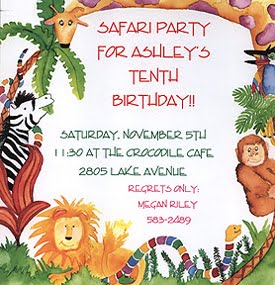
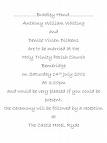
Example invitation formal :
 

Example informal :

Asking For Information


What is a question?
A question is a request for information or action.
When writing a question you should always end the sentence with a question mark (?).


Asking for information

-(Excuse me) can could you tell me (the way to the station/...)
-Do you know (if they are here / when they leave /...)
-Could you give me some information about ...
-Is it true that (they have moved /...)
-Have you got an idea of (when they leave / ...)
-I'd like to know (what he does / ...)


Correcting agreeing with a statement

-Yes, it is / was / will ...
-Oh yes, I did / Oh no, I didn't.
-That's (quite) right.
-No, it isn't really so.
-I'm sorry but that isn't correct.
- Well, it's the contrary in fact.


Asking about language

-Pardon? / I beg your pardon?
-I'm sorry I didn't catch what you said.
-What do you mean?
-What is the meaning of ...?
-How do you pronounce..?
-How do you say that?
-How is it spelt? How do you spell ...?


Expressing certainty

Being sure.
I'm sure / certain (that) (he will come / ...)
-There is no doubt about it.
-No doubt (you'd like to see your gift / ...)
-I certainly think / believe that (she was unhappy / ...)
-I'm positive on that point.
I'm certain...
-It is obvious that ...
-That goes without saying.
-It's crystal clear.
-It's as sure as two and two make four.
Being less sure.
-I think so
-I think that ( they will be there by 6 / ...)
-I suppose so.
-I suppose / expect that ( it is the way to the bus stop /...)
-I believe that ( he is sick / ...)
-I assume (that ) (they did it / ...)
-It's more than probable that ...
-I wouldn't be surprised if ....
Being unsure.
I'm not sure (that) ...
-I wonder if...
-I doubt if ...
-May be / perhaps (they're right / ...)
-It's very doubtful whether (he'll accept / ...)
-There's a little chance of ( arriving in time / ...)
-It isn't known for use ...
Not knowing.
-I don't think so.
-I don't think that (they will give her a ring / ...)
-I don't know / I've no idea / I wouldn't like to say (where it is).
-I haven't the faintest idea.
-Sorry, I can't tell you.


Inquiring about certainty

-Are you (quite) sure (that) ...
-Do you think so?
-Do you think that ...?
-Do you believe / suppose that (it's a good idea / ...)?


Expressing possibility

-It is possible
-It is possible (that) (it rains / ...)
-I / you ... can (drive / read / ...)
-He / we / ... is/are capable of ( doing better / ...)


Expressing impossibility

-It is impossible
-It is impossible (that) (it rains / ...)
-I / you ... can't (drive / read / ...)
-You can't possibly ( do this / ...)


Inquiring about possibility

-Is it possible?
-Is it possible (that) (he will come / ...)
-Will he / she / they .. be able to (do it / ...)?
-Can he / she /.... (drive / read /...)?


Expressing obligation

-You have (got) (to go / ...)
-We / you ..must (leave / ...)
-Do behave yourself!
-It is compulsory.
You are to .. (be there at 4 / ...)
-We are forced to do so.
-We were obliged to (pay / ...)


Expressing there is no obligation

-It's not necessary / not necessarily.
-No) you needn't / you don't need to ... (go out / ...)
-No need to (wait / ...)
-You don't have to .. (wait / ...)
-You haven't got to (wash the car / ...)
-It is not compulsory.
-It is not absolutely vital.
-Why should you?
-You aren't obliged to ...(wait for them /...)


Inquiring about obligation

-Must we ( go / stay /...)
-Do you have to ( wash our hands / wait/...)
-Have I / we got to ( go now /...)
-Is it compulsory?
-Am I / Are we required to ( take an exam / ...)
-Need we (stay / ...)
-Am I to (wait here / ...) ?
-Am I obliged to (leave / ...)?
-Are we supposed to (read this book / ...)?


Forbidding, refusing permission

Parking is strictly forbidden / prohibited here.
-Trespassers will be prosecuted.
-No begging / parking / waiting / ...
-The won't let me (go out / ...)
-Nobody is to (enter this area / ...)
-I was refused permission to ( use my car / ...)
-You may not (drink alcohol / ...)
-We weren't allowed to (talk / ...)
-It's out of question.
-Smoking / drinking alcohol .. is not permitted/ is prohibited.


taken from: http://www.tolearnenglish.com/exercises/exercise-english-2/exercise-english-17644.php

Dynamic Glitter Text Generator at TextSpace.net